

Schedule
4 December
check in
5-10 December
8:45 – 19:15 daily
11 December
break
12-17 December
8:45 – 19:15 daily
18 December
check out
Programme
Navakaraṇa Sākalya Tantra
Navakaraṇa Sākalya Tantra Curriculum is divided into:
Module 1: Bheṣaja (Healing) consisting of 108-hr in-person)
Module 2: Cikitsā (Therapy,) consisting of virtual lesson and in-person weekend workshops spread over in different locations across the year.
This course will cover the first module: Bheṣaja (Healing).
Course Objectives
Bheṣaja (Healing) TTC focuses on learning:
- the Fundamental Principles (Maulika Siddhānta) upon which the entire system of self-directed transformation is based, including holistic constitution, (the nature of a substance, purificatory and pacificatory measures;
- the principles of Navakriyā (the Nine Cleanses), which form the foundation of self-healing (Bheṣaja) and holistic lifestyle (Svasthavṛtta);
- a curated collection of procedures and sequences known as Bheṣaja Krama Mālā, which includes diverse techniques in breathing, prāṇāyāma, mindfulness, concentration, sound-healing, and the Navakaraṇa Suizen series.
The objective of this course is to provide a comprehensive understanding of the fundamental theorise of our method and offer comprehensive theories, methodologies, and techniques that can be applied both at a personal lifestyle level and in professional teaching contexts.
It supports the integration of holistic aspects into practice and expands and studio curriculum through the therapeutic and transformative dimensions of the method.
Syllabus
During this course the participants will learn:
- fundamental principles of 5-element holistic lifestyle
- active cleanses
- essential bodywork manipulation
- seated movement therapy
- technique of emotional catharsis
- self-analysis therapy
- concentration techniques
- relaxation and sound therapy
Schedule
Early morning
Tale bath and review the theories and series (self-study)
8:45 – 9:00
Silent Mindful Practice
9:00 – 11:00
Series Practice.
11:00 – 11:30
Refresh, change of clothes and breakfast.
11:30 – 13:30
Series: Sequencing / De-construction / Conditioning
13:30 – 14:00
Nourishing lunch
14:00 – 15:30
Lecture / Methodology
15:30 – 17:30
Massage sequencing
17:30 – 18:00
Nourishing dinner
18:00 – 19:00
Teaching skills
Certification
Upon completion of the course you will receive Sākalya Tantra Bheṣaja Certificate. Graduates holding this Certificate are authorised to teach this syllabus.
Language
Conducted in English. If you need interpreter send a request →
Exclusive setting
In order to maintain the highest quality training, facilitate learning and easy interaction between faculty and students, the number of participants will be limited.
Post training follow-up
After the training you can follow up with Dario on how to incorporate Sākalya Tantra curriculum in your studio.
Meals
Inclusive of brunch, snacks, infusion and dinner per day. One complimentary bottle of water per guest, per day. Additional bottles available for purchase.
All meal are vegan (without the use of garlic and onion). If you have any food allergies or serious autoimmune disease limiting your diet (e.g. Celiac disease etc), please check with our organiser before making your booking, if it is possible to prepare food options for you.
Class requirements
- Black/blue and red pens
- Pencils and eraser
- Three (or more) notebooks
- Laptop
- Manual(s) (provided by the Teacher on the first day)
- Personal mat
- Wool blanket
- Two exercise blocks
- One exercise towel
- One face towel
- Sufficient a change of clothes (2 set per day)
Recommended:
- Water bottle or thermo
- Five-toes socks
Storage:
You can leave only inexpensive and unimportant items in the śālā (such exercise blocks, mat etc.) at your own risk and responsibility.
As per our Terms & Conditions the Teacher, Company, Host and/or staff appointed are not responsible for any damage or loss of your personal belongings. You must not leave your manual(s) in the śālā. Please also note that in case participants lose the manual, no other copy will be given.
Training and Lifestyle Regulations
Regulations will be applied without exception:
- Take a quick shower every morning before entering the śālā.
- Change clothes after practice.
- Bring your own wool blanket/mat, personal towel and exercise towel.
- Bring a laptop or tablet (if you do not have one you cannot participate in the training).
- Be punctual with training and break schedule.
- Noo chat in the śālā besides the conversation led in the class.
- All in silence and light off in all the rooms from 22:00 to 6:00 (including mobile and reading lights).
- Consumption of alcohol and smoking are not allowed inside our premises.
- Keep your room clean and keep silence in your room after 22:00.
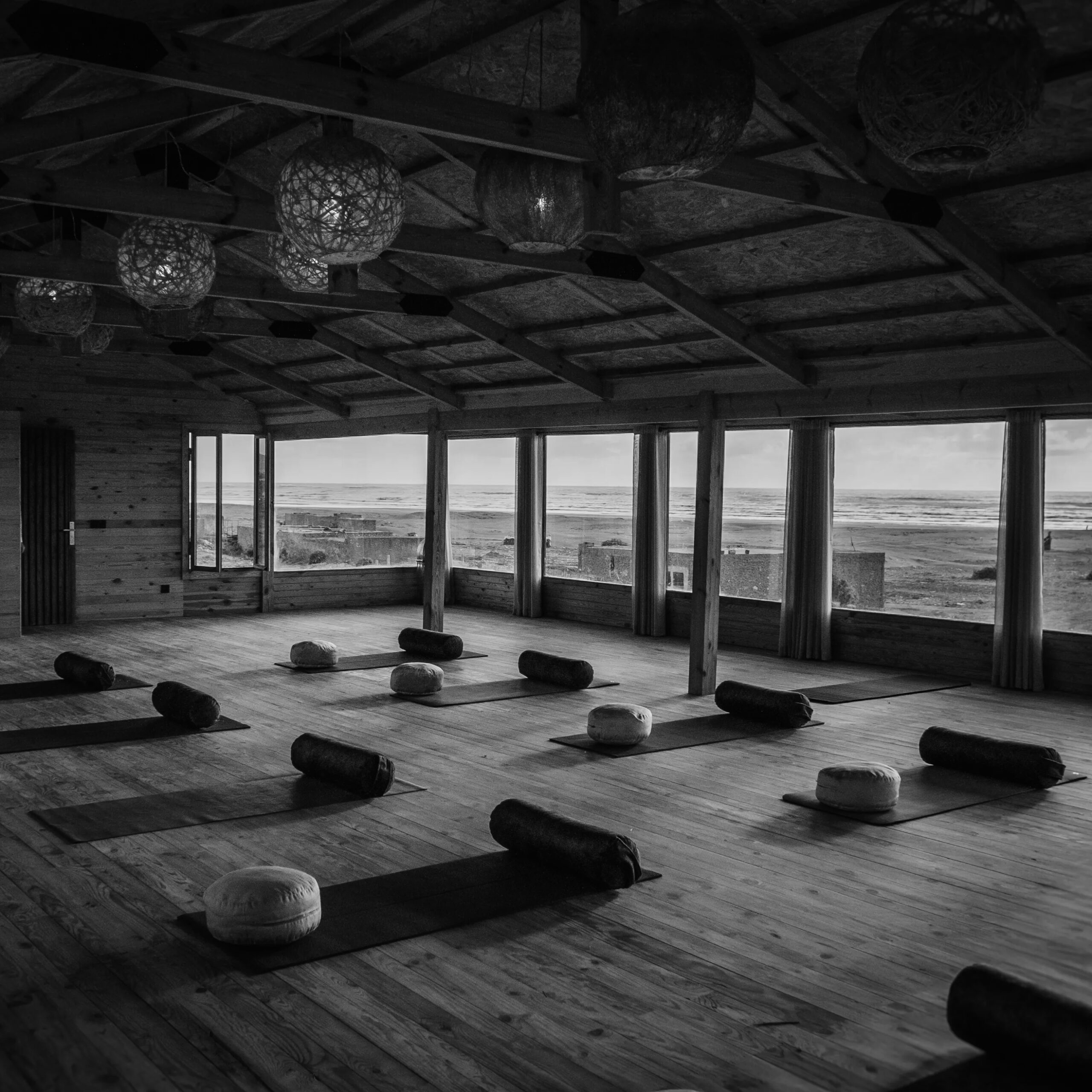
- No food is allowed inside the śālā.
- The śalā is a silent room.
- Avoid staying in the śālā (gathering, chatting) between 21:00 and 8:00.
- By 8:30 you should be in the śāla ready for the training.
Terms and Conditions
By registering to our programme you confirm to read, understand, acknowledge and agree on the Terms & Conditions. and have read, understood, acknowledged and agreed to our Global Privacy Policy worldwide.
Frequently asked questions
Yes, this is the course to start with.
Yes, anyone who has completed module 1 and 2 Navakaraṇa Vinyāsa Hṛdayam can join.
Yes, the curriculum is exactly the same yet this upcoming course in Morocco will have additional contents (so you will learn more contents than the previous courses).
Every experience and place is unique. Definitely Morocco is a different experience to Japan. The course in Japan was blended Curriculum + Excursions. The Course in Morocco will focus mostly on Curriculum. You with learn a lot more as it will be a full immersion in study and practice. On other hand if you like to visit Dario in Japan you are welcome to do so. So you can have both experiences.
Not at the moment. There are new regulations which will make running a course very expensive, right now. Therefore would be economical unaffordable for many. If we spilt TTC from visiting Japan you can enjoy both experiences at accessible cost.
We limit the number of participants to ensure a focused and high-quality learning environment. Exact numbers may vary slightly depending on the course format, location and number of assistants in the course.
On average, we take a minimum of 15 and a maximum of 30 students, depending on the location and logistical considerations.
We do not disclose the number of sign-ups, as course availability can change quickly. Spots may be taken or become available even within a single day. If you are seriously considering joining, we recommend completing your registration at your earliest convenience to secure your spot.