
Nava-pattra
Nine-Petal Flower
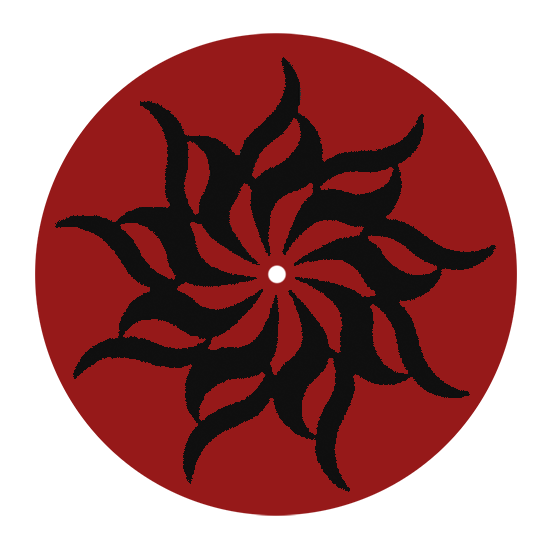
The symbol of Navakaraṇa is the nine-petal blooming flower, nava-pattra. This flower represents the crimson red bloom of the plant Boerhaavia Diffusa, also known as Punarnavā, which translates to “the one that rejuvenates.” Though Punarnavā may appear as a simple weed to those without botanical knowledge, it holds remarkable properties that can rejuvenate both the mind and body. Similarly, the transformative effects of the Navakaraṇa method can only be truly understood and experienced by those who dedicate themselves to its study and practice.
Awakening
The blooming flower symbolises awakening—breaking free from ignorance, individuality, and therefore suffering, which are typically represented by a closed or unbloomed bud. The number nine, representing the end of a cycle, symbolises achieving completeness and liberation from individuality within this lifetime.
Unity in Diversity
Unity in diversity is symbolised by the mathematic of the number 9. If you look closely, any number multiplied by nine gives always a number which the sum of the digits equals nine (e.g., 1×9=9; 2×9=18, where 1+8=9; 3×9=27, where 2+7=9, etc.). Likewise, anything we create from the methodology of Navakaraṇa remains Navakaraṇa despite differ in many aspects. This reflects the concept of unity in diversity, a core principle of Navakaraṇa Kula. We are all part of one community, yet preserve our distinctive uniqueness and multifold application of Navakarana methodology. The community supports each navakaraṇi in discovering their authentic self and unfolding a genuine personality, free from any social-cultural, religious or what so ever external influences.
Oneness in Infinite Multitudes
In mathematics the number nine is the largest single-digit number and therefore symbolises the infinite variety of forms within a singular unity, or total completeness. Each petal of the flower signifies a distinct direction for self-transformation and personal growth. The Navakaraṇa practice, while grounded in unified principles, is infinite in its applications, adapting to the needs and individuality of each practitioner. This concept of “oneness in multitudes” is symbolised by the central dot of the flower (which is actually empty “0”). Just as the petals of a flower spread out in different directions but are all united at the centre, we too are one in Navakaraṇa, though spread across the globe in our diversity. The Navakaraṇa flower serves also as a reminder us while embracing our freedom to be authentic individuals to stay grounded in our fundamental principles and remain united as a community.
Nava-pattra Tri-guṇa-s
The three colours—black, red, and white—used in the Navakaraṇa symbol represent mastery over the three guṇas (qualities or tendencies) of nature: tamas, rajas, and sattva.
These three colours signify victory over the fundamental forces governing the body, emotions, and mind:
- Black symbolises mastery over tamas (the quality of inertia, darkness, and ignorance), representing control over the body and its tendencies.
- Red represents mastery over rajas (the quality of passion, activity, and restlessness), symbolising control over emotions.
- White stands for mastery over sattva (the quality of purity, harmony, and balance), symbolising mastery over thoughts and the mind.
Nava-pattra Maṇḍala
The nine-petal flower is also a maṇḍala—a circular symbol representing the nature of life and the universe. This circle illustrates the cyclical nature of existence (manifestation, expansion and absorption), where birth and death meet at the same point of the life-cycle (represented by the dot in the centre). The nine divisions of the maṇḍala metaphorically represents infinity, the continuous process of becoming, and the eternal cycle of existence.